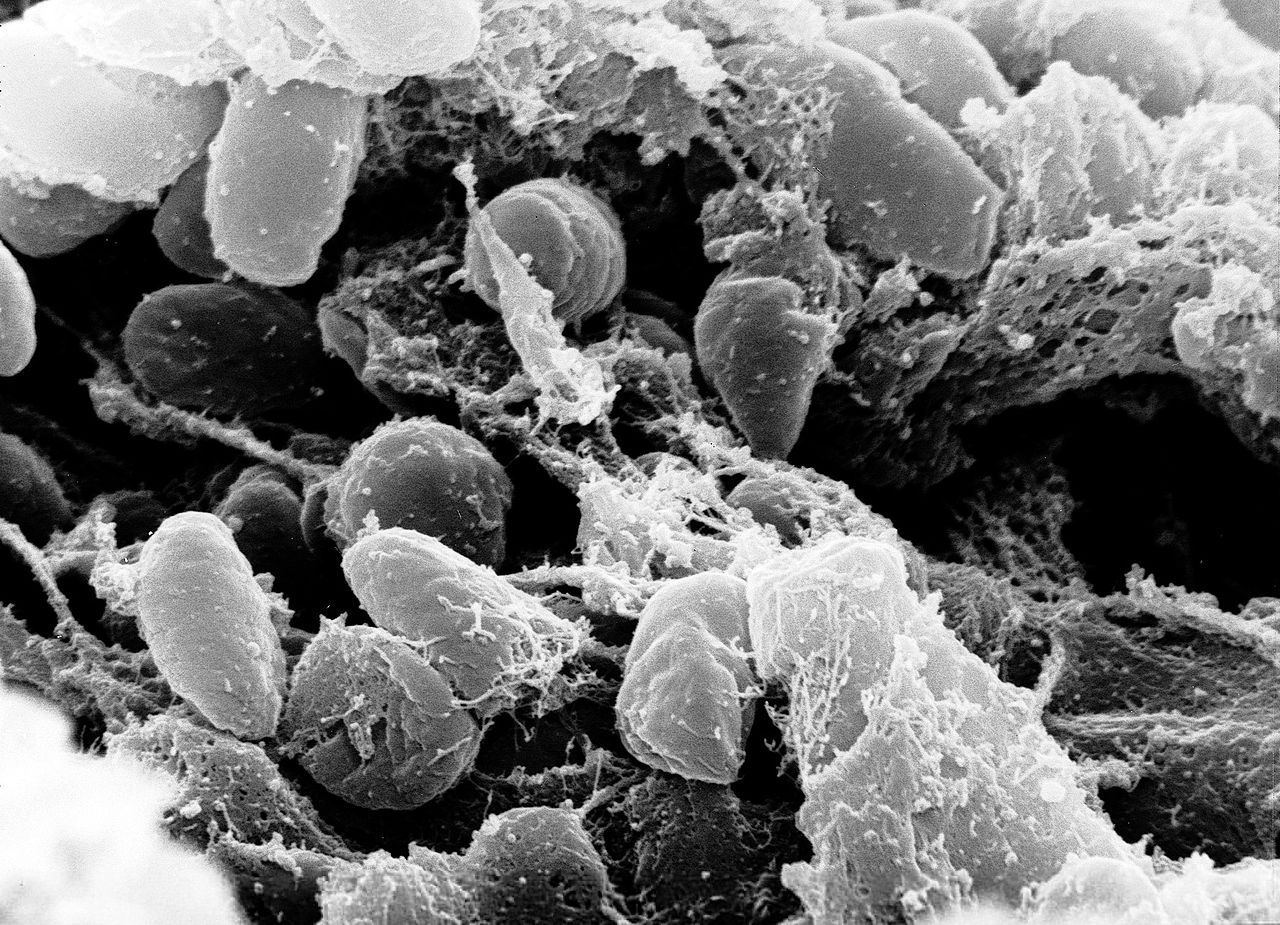
Was This the First Pandemic
Pandemics linger even while some people want to believe it’s over. COVID-19 is a good example. So, let’s look back at three huge pandemics caused by one bacterium, Yersinia pestis, that continues to persist today.
The first, the Plague of Justinian, began around 500CE and lasted for200 years. It killed 50 million people in Northern Egypt near the town of Pelusium.
The second Pandemic occurred in the mid 1300s. In just 7 years, it killed two thirds of Europe’s population plus 25 million people in Asia and Africa. This one lasted four centuries.
The third plague began in China and continues today with outbreaks in numerous countries every year. Even though yersinia pestis is blamed for all three plagues, it’s never been found near Pelusium, the site of the first outbreak. No bodies near the city had enough protein to identify the microbe. Then excavations in the 90s uncovered a mass grave not far from the city with skeletons of 100 adults. Researchers removed molars and ribs to look for traces of Y. pestis. Recently, they identified evidence of the bacterium’s proteins and DNA from those remains. It’s the first hard evidence that Y. pestis was behind the First Pandemic in the Byzantine Empire.
Cities like Jerash were centers of trade that made it easier for the bacteria to spread. We saw that with COVID-19 and it’s a lesson we learned and will heed into the future.
More Information
The "Plague Of Justinian" May Have Been The First Pandemic. DNA At A Mass Grave Has Finally Identified Its Cause.
Looking at DNA at an arena turned into a mass grave at the epicenter of the outbreak, scientists found a familiar old foe.
Genetic Evidence of Yersinia pestis from the First Pandemic
We present the first genomic evidence of Yersinia pestis from the First Pandemic in the Eastern Mediterranean. Whole-genome sequencing revealed a single uniform strain, consistent with a rapid local outbreak. We integrate archaeology, proteomics, and ancient DNA to connect evidence to historical accounts of the Plague of Justinian ~1500 years ago.
Ancient Origins and Global Diversity of Plague: Genomic Evidence for Deep Eurasian Reservoirs and Recurrent Emergence
Yersinia pestis, the causative agent of plague, has triggered multiple pandemics throughout human history, yet its long-term evolutionary patterns and reservoir dynamics remain poorly understood. Here, we present a global phylogenomic analysis of ancient and modern Y. pestis strains spanning from the Neolithic and Bronze Age to the present day.