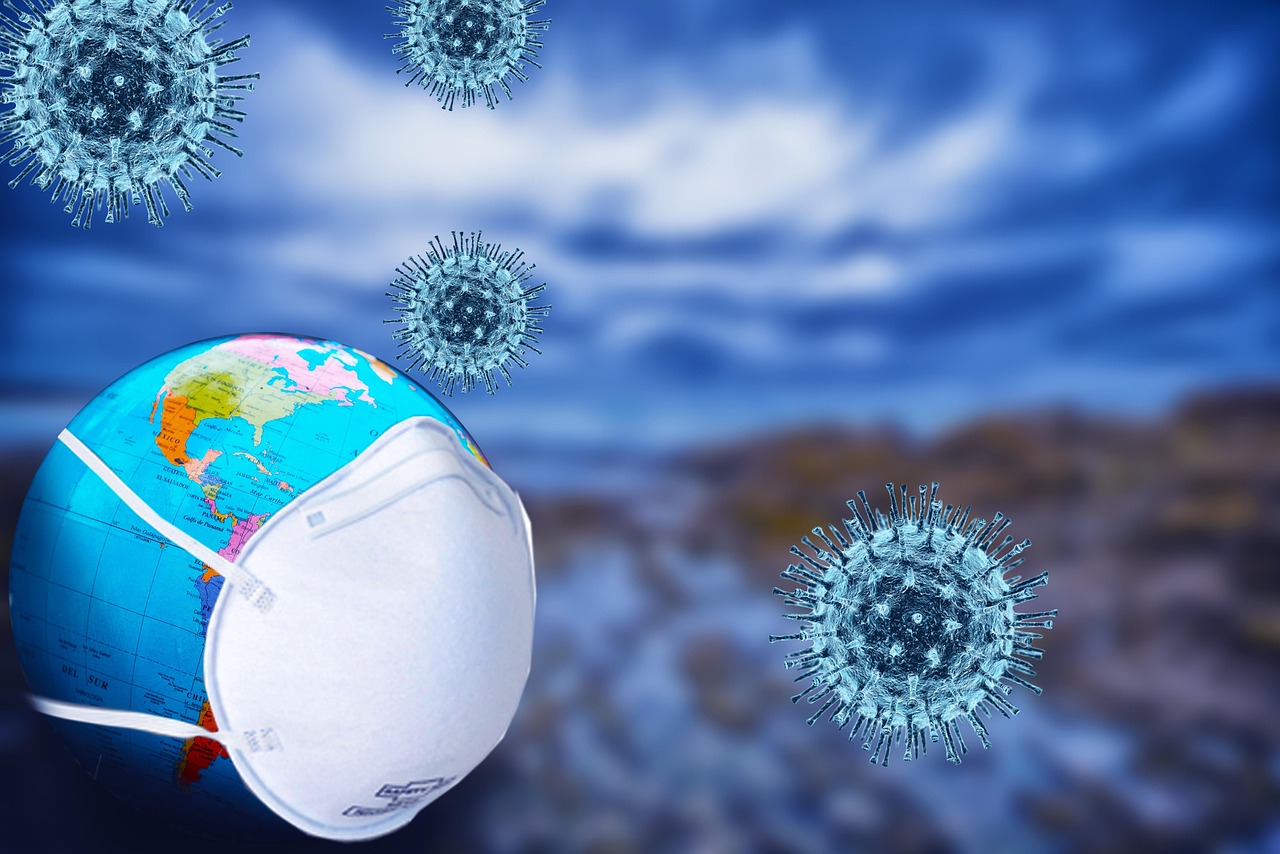
How Fast does an Infection Disease Spread
If you’re looking to big box stores to tell you what season it is, you’d be confused. Halloween decorations in August, and Christmas in September. But for Dave and I, it’s clear this is flu season.
To rate how quickly a virus can spread, scientists use a term called R0 (R-nought) which describes how many additional people one sick person can infect. Influenza virus has an R-nought of about 1 to 2, meaning 2 extra people will get sick. So R-nought is a good estimate of how fast the flu will spread.
The COVID-19 virus is slightly higher with about 1.5 to 2 and a half. But the measles virus has an R-nought between 12 and18 making it the most transmissible virus in an unvaccinated population.
Another microbe with the same R-nought is Bordetella pertussis which causes whooping cough. Chicken Pox has an R-nought of 9 to 10.
This would all be scary if we didn’t have tools, but we do. The MMR vaccine nearly wiped-out measles as a childhood disease in America 5 years ago, but then vaccination rates fell and measles is back. That’s why health experts are emphasizing vaccination to slow its spread. Ninety-five percent of us must be vaccinated to reach “herd immunity”, when nearly all of us are protected.
Despite what anti-vaxxers say, it’s crucial to know vaccines work and the MMR vaccine against measles does not cause autism. Allowing your child to get these diseases carries complication risks including pneumonia, seizures and even death. As always, Get your doctor’s advice.
More Information
A comparison of transmissibility of SARS-CoV-2 variants of concern
The World Health Organization (WHO) has currently detected five Variants of Concern of SARS-CoV-2 having the WHO labels of 'Alpha', 'Beta', 'Gamma', 'Delta' and 'Omicron'. We aimed to assess and compare the transmissibility of the five VOCs in terms of basic reproduction number, time-varying reproduction number and growth rate.
Estimating the basic reproductive number of varicella in South Korea incorporating social contact patterns and seroprevalence
Varicella, which is caused by the varicella zoster virus (VZV), is a common infectious disease affecting children. Varicella vaccines have been used for decades; however, vaccination policies vary across countries because of differences in VZV epidemiology.
These Are The Fastest-Spreading Diseases, According to Science
When the COVID pandemic hit, many people turned to the eerily prescient film Contagion (2011) for answers – or at least for catharsis. Suddenly, its hypothetical plot felt all too real. Applauded for its scientific accuracy, the film offered more than suspense – it offered lessons.